

No AI tool can replicate a face-to-face exchange, and that meeting is why events and exhibitions are so valuable. They pay back when they are planned as part of a campaign, not a single day in the diary. Agree the business outcome first, build the event or activation so it can be captured and reused, and follow up within days.
Two questions come up again and again when marketing directors plan events: how do we prove return to the board, and how do we turn event contacts into pipeline? This article is our answer, drawn from events we have run and helped to run.
The short version
- Events matter more as content gets easier to produce and harder to tell apart. No AI tool can replicate a face-to-face exchange, and people still want to meet, question and see for themselves.
- The return starts with an outcome agreed before the stand is designed or the venue booked.
- One event should feed months of content.
- The days after the event decide the return, so plan the follow-up first.
- Report contribution, not just leads: reach, relationships and pipeline together.
Why do events matter more in a digital-first world?
Marketing teams are producing more content with fewer people, and AI tools make it faster still. Many marketing directors tell us the result is sameness: brands that sound alike and audiences who scroll past.
A room full of the right people does what a feed cannot. A customer can ask a hard question, a partner can see the product working and a journalist can meet the people behind the story. Not more noise but better moments.
Events also give you real stories, faces and conversations to build the rest of your marketing around.
What does return on investment really mean for an event?
Return is wider than leads scanned at a stand. We look at five layers:
- Immediate: meetings booked, sign-ups and enquiries.
- Pipeline: how many contacts become opportunities, and how quickly.
- Relationships and reputation: partners won, advocates made, coverage earned.
- Social: the posts, shares and conversation an event creates, when it is planned to generate them.
- Assets: film, photography, quotes and research that keep working after the day.
Many marketing directors need to show contribution without perfect data. Agree three measures before the event, one each for reach, pipeline and relationships, and agree them with finance or the board. A simple view agreed up front beats a perfect dashboard built afterwards.
How do you build the case before the doors open?
Start with a clear purpose and the right people in the room. SOGROW and Venturefest South show how.
SOGROW was an inaugural business symposium, held at The Spark, Solent University on 8 October 2025. It brought together more than 140 business leaders to shape Southampton’s economic future. We supported Hampshire Chamber of Commerce with marketing and event expertise, and our Creative Director, Ed Gould, hosted the programme. The lesson: a sharp purpose, aligned partners and a headline keynote speaker resulted in an invitation worth accepting.
Venturefest South is the clearest example we have. It has spent ten years bringing together the founders, investors, innovators and businesses behind the Central South’s innovation scene, and for all ten of those years Carswell Gould has been the lead delivery partner and driving force behind it with our Creative Director Ed Gould, also being Chair of the Venturefest South Board.
A decade of delivery shows you what a one-day view misses. The Festival of Innovation is the peak, but the programme runs all year, with media, partnerships and content building towards it. Growth Conversations, a podcast series made for the tenth anniversary, tells the story through the founders and investors who have lived it.
Every year builds on the last, so the audience, the partners and the reputation compound. The lesson: events that last are programmes, not just a single date in the diary.
How do you make one event work for months?
The strongest returns come from events designed to travel beyond the venue.
Field Day, the customer and media day we ran for Wildflower Co. on 10 July 2026, gathered customers, land managers and industry professionals at its Hampshire headquarters. It combined farm tours, expert talks and a panel on Biodiversity Net Gain with the launch of a new consumer brand and product. The event enabled relationships with existing customers, advocates and prospects to be fostered as well as regional print and broadcast media coverage gained.
For #Codeathon2025, we delivered the reach and engagement strategy for Innovate UK and BAE Systems: an information hub, campaign content and ten regional events across the UK with a registration target of 60 delegates at each event.
On the exhibition floor, the principle is the same. The modular stand we designed for Wildflower Co. at FutureBuild 2026 was built for reuse, won the Most Sustainable Stand Award as reuse was designed in from the start.
What does it take to deliver on a global stage?
HxGN LIVE Global in Las Vegas shows the other end of the scale. In 2022, Hexagon’s flagship conference engaged more than 3,000 in-person attendees over four days at the Venetian. We acted as marketing lead, working under Hexagon’s Global Marketing lead and its event lead for Hexagon Manufacturing Intelligence, and ran the multi-day agenda as compere and presenter, including the Global Resellers Conference.
At that scale, return depends on one team holding planning, content and presenting together. Hexagon’s Global Marketing Director described us as “incredibly creative and responsive”.
Shirley Wynne-Jones on what is changing in events
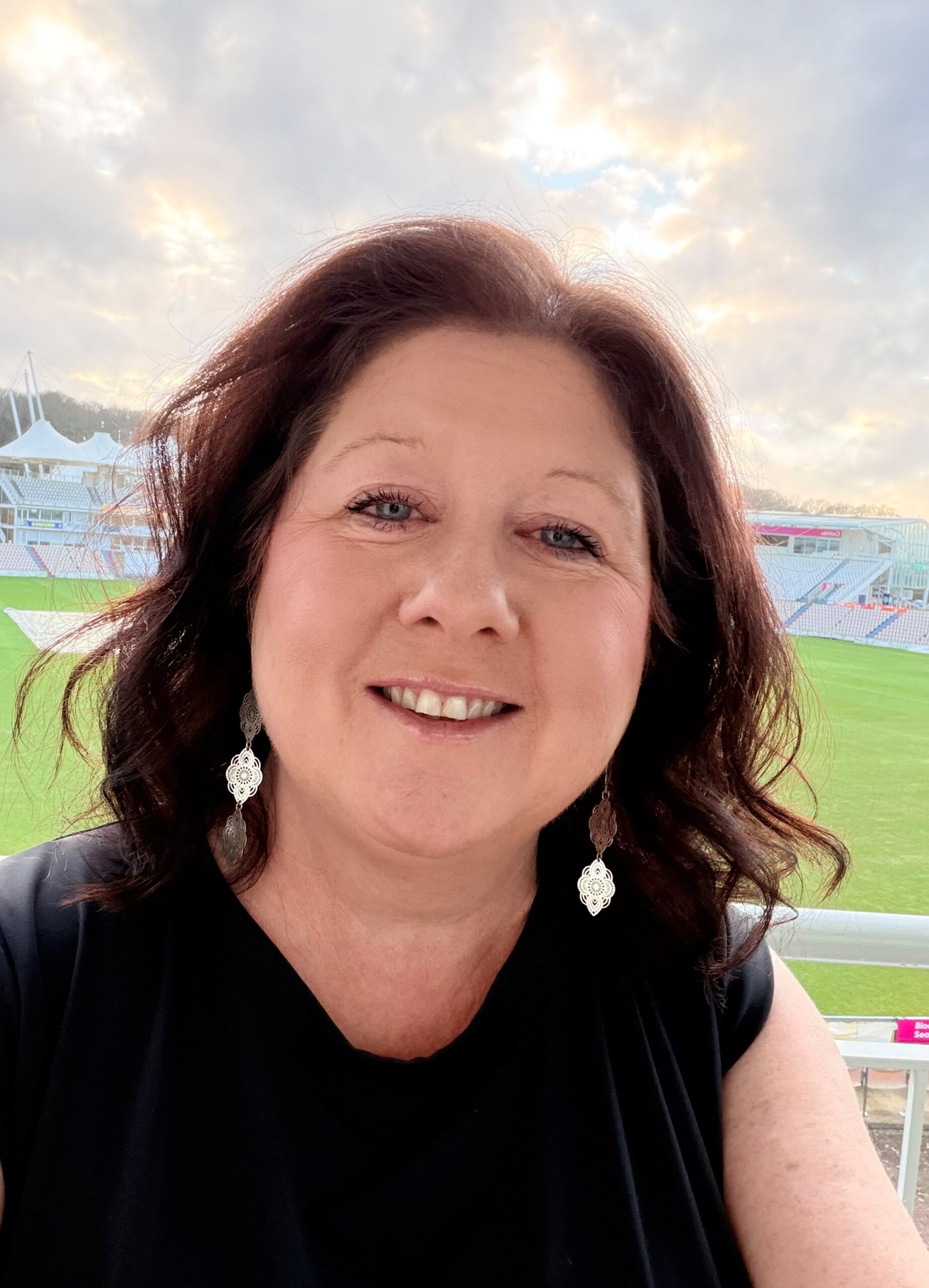
Shirley Wynne-Jones is Event Director at Carswell Gould, with more than 30 years’ experience delivering events, exhibitions and stakeholder engagement programmes across the UK and Europe. Her portfolio spans international exhibitions, conferences, innovation festivals, gala dinners, VIP hospitality and sporting events. She has led complex delegations and exhibition programmes at Hexagon LIVE, MIPIM, UKREiiF and Expo Real, in destinations from Cannes and Munich to Las Vegas.
Here is how she answers four questions about where events are heading.
What is changing in how brands use events and exhibitions?
Technology plays a huge part in how events are changing, and it will keep evolving. From planning to on-site tech, there are many more opportunities to be visual and impress your delegates: amazing video, great sound and lighting, and interactive software that lets your audience be part of the event at every opportunity.
Where do you see the biggest wasted opportunity?
The follow-up, without a doubt. Many businesses forget to follow up with the connections they made, to keep telling the stories that began at the event and to keep the momentum going. The event is not over when it is over! Feedback is just as critical, because it makes your next event better and shows you what your audience wants to see.
How are technology and AI changing event planning and follow-up?
New tech is emerging all the time. A few years ago it was impressive to have an event app with agendas, speaker bios and floorplans, real-time attendee analytics or VR glasses. Now there is much more on offer. Recently I have been at three events with a humanoid demonstration, and it drew huge crowds. 3D video is a great feature, and apps that connect delegates for networking are getting better. The pandemic has also changed how audiences and speakers can join live events virtually, which opens up wider involvement globally.
The key is a visual journey, with production that brings sound, lighting and vision together.
What should a marketing director think about before committing to a stand or event?
Three things:
- Objectives: what is the purpose of the stand, event or project? Set clear goals.
- Outcomes: what does success look like for you, your business, your team and your clients?
- Future: what happens once the live event is over?
Once you know you want to proceed, there is plenty more to consider: researching venues, planning dates, assembling a support team and creating a plan.
Six steps to get more from your next event
- Start with the outcome. Write down the commercial result you need, such as meetings, opportunities or partnerships, before any design or booking.
- Choose three measures. One for reach, one for pipeline and one for relationships. Agree them with finance.
- Plan the follow-up first. Decide who contacts whom, with what, within 48 hours.
- Design for capture. Build in film, interviews, photography and sign-up points so the event produces assets.
- Join up online and live. Use a hub, email and social to build the audience before the event and sustain it after.
- Report contribution. Show the board the before, during and after, not just the leads from the day.
Frequently asked questions
How do you turn event contacts into pipeline?
Decide the follow-up before the event. Tag every contact by interest, then contact the most engaged within 48 hours with something useful, such as a session film or a relevant piece of research. Pass qualified opportunities to sales with context. Speed and relevance matter more than volume.
How do you prove event ROI to the board without perfect data?
Agree three measures with finance beforehand: one for reach, one for pipeline and one for relationships. Report them alongside the assets the event produced. A simple view you can repeat every time is more persuasive than a one-off model nobody trusts.
Are in-person events still worth it when digital is cheaper?
Yes, when they have a defined purpose. Digital channels build reach, while events build trust and produce content that feeds those channels. The test is whether the event is planned to work with everything else you do.
What should you do next?
Before you book your next stand, speaker or conference venue, write down the outcome you need and how you will know you have reached it. If you would like a second opinion, talk to us about live and virtual events built around that outcome.


